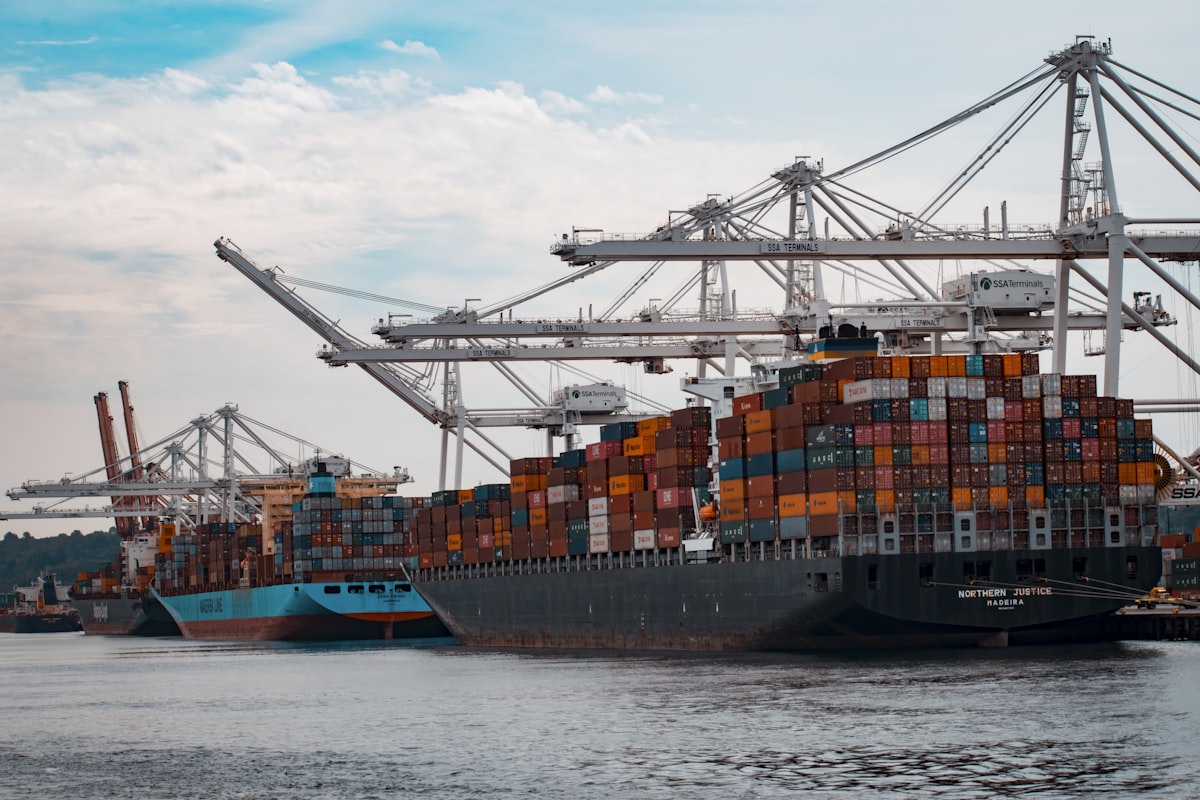
If you buy a car manufactured in South Africa and want to sell it in Nigeria, you face tariffs. If you grow coffee in Ethiopia and want to process and sell it in Kenya, you face customs delays, regulatory mismatches, and administrative costs that can exceed the value of the goods. If you run a technology company in Senegal and want to hire engineers in Rwanda, you face work permit requirements, currency conversion costs, and regulatory barriers that make it easier to hire from Europe than from a neighbouring African country.
This is the problem the African Continental Free Trade Area was created to solve. And if it succeeds, it will be the single most transformative economic event in African history since independence.
What the AfCFTA Actually Is
The African Continental Free Trade Area (AfCFTA) is a trade agreement among 54 African Union member states — every country on the continent except Eritrea — that creates a single continental market for goods and services. Signed in Kigali, Rwanda in March 2018 and launched for trading on 1 January 2021, it aims to:
Eliminate tariffs on 90% of goods traded between African nations (with sensitive items comprising the other 10%, subject to longer transition periods).
Liberalise trade in services across five priority sectors: business services, communication, finance, tourism, and transport.
Create a unified market of 1.4 billion people with a combined GDP exceeding $3.4 trillion.
Establish common rules on investment, competition policy, intellectual property, and e-commerce across the continent.
By number of participating countries, the AfCFTA is the world's largest free trade area. By population covered, it rivals the Regional Comprehensive Economic Partnership (RCEP) in Asia. By ambition — unifying a continent of 55 nations, dozens of languages, multiple currencies, and enormously varied regulatory frameworks — it is without precedent.
Why Africa Needs This
The fundamental problem the AfCFTA addresses is this: Africans trade more with Europe, China, and the United States than they do with each other.
Intra-African trade accounts for approximately 15% of total African trade. Compare this with intra-European trade (over 60%), intra-Asian trade (over 50%), or intra-North American trade (over 40%). Africa's figure is the lowest of any continent — and it is not because Africans don't want to trade with each other. It is because the barriers to doing so are artificially high.
These barriers are the direct inheritance of colonialism. Colonial infrastructure was designed to extract resources and move them to ports for export — not to connect African economies to each other. Railways ran from mines to coasts, not from capital to capital. Regulatory frameworks were modelled on the colonyser's system, meaning francophone and anglophone neighbours often have incompatible customs procedures, product standards, and business regulations.
The result is that it can be cheaper to ship goods from China to Lagos than from Accra to Lagos — despite Accra being 300 kilometres away and China being 10,000. It can take longer to clear customs between two African neighbours than it takes to clear customs between an African country and Europe.
The AfCFTA is an attempt to fix this — to turn the continent from 54 fragmented economies into one integrated market.
How It Works in Practice
Tariff Elimination
The core mechanism is tariff reduction. Under the AfCFTA, member states are progressively reducing tariffs on goods originating within the continent. The schedules are divided into categories:
Category A (90% of tariff lines): Tariffs eliminated over 5 years for developed African economies (South Africa, Egypt, Nigeria) and 10 years for least-developed countries. This is the bulk of continental trade.
Category B (7% — Sensitive Products): Tariffs reduced over 10 years for developed economies, 13 years for LDCs. These typically include goods where domestic industries need protection during adjustment — textiles, some agricultural products, basic manufactured goods.
Category C (3% — Excluded Products): Products excluded from tariff liberalisation for strategic, health, or food security reasons. Each country determines its own exclusion list, capped at 3% of tariff lines.
Rules of Origin
To prevent countries from simply importing goods from outside Africa and re-exporting them tariff-free, the AfCFTA includes Rules of Origin requirements. Goods must demonstrate sufficient "African content" — typically that a minimum percentage of their value was added within the continent — to qualify for preferential tariff treatment. This mechanism is critically important because it incentivises manufacturing and processing within Africa rather than mere transit trade.
The Pan-African Payment and Settlement System (PAPSS)
One of the most significant practical innovations supporting the AfCFTA is PAPSS — a continental payment system that allows businesses to trade in local currencies without first converting to US dollars or euros. Before PAPSS, a Kenyan business buying goods from Ghana had to convert Kenyan shillings to dollars, then dollars to Ghanaian cedis — paying conversion fees twice and losing value at each step.
PAPSS eliminates this friction. It enables direct currency-to-currency settlement, reducing transaction costs and settlement times from days to minutes. The system went live in January 2022 and is progressively expanding across the continent. The African Export-Import Bank (Afreximbank) estimates PAPSS could save the continent $5 billion annually in currency conversion costs alone.
What Has Actually Changed Since Launch
The AfCFTA has been live for five years. Here is what the data shows:
Intra-African trade has grown by approximately 18% since the agreement's launch — a significant acceleration from pre-AfCFTA trend growth of 5-7% annually. The most active corridors are East-Southern Africa (Kenya-Tanzania-South Africa), West Africa (Ghana-Nigeria-Côte d'Ivoire), and North-East Africa (Egypt-Kenya-Ethiopia).
47 of 54 signatory states have ratified the agreement, with tariff schedules submitted by the majority of ratifying nations. Implementation remains uneven — some countries have fully operationalised their tariff reduction commitments while others are still in administrative preparation.
The Guided Trade Initiative (GTI) has been the primary practical vehicle for early implementation. Launched in October 2022, the GTI facilitated actual trade under AfCFTA terms among an initial group of eight countries (Cameroon, Egypt, Ghana, Kenya, Mauritius, Rwanda, Tanzania, and Tunisia), with subsequent expansion. Products traded under the GTI include ceramics, tea, coffee, processed foods, rubber, and pharmaceutical products.
Cross-border investment is increasing. South African, Nigerian, Kenyan, and Moroccan companies are expanding across the continent at an accelerating rate, using the AfCFTA framework to establish regional manufacturing, distribution, and service operations. Dangote Group (Nigeria), MTN (South Africa), Equity Group (Kenya), and OCP Group (Morocco) are among the most active continental expanders.
Which Sectors Benefit Most
Manufacturing
The AfCFTA's tariff reductions and rules of origin requirements directly incentivise manufacturing within Africa. Companies that establish continental production facilities gain preferential access to a 1.4-billion-person market. Automotive assembly (Morocco, South Africa, Kenya), pharmaceutical manufacturing (Ethiopia, South Africa, Morocco), and textiles (Ethiopia, Madagascar, Tanzania) are seeing the most significant investment growth.
Agriculture and Food Processing
Africa imports approximately $40 billion in food annually — much of which could be produced and processed within the continent. The AfCFTA creates the market conditions for agricultural value chains to operate at continental scale. A processor in Côte d'Ivoire can now sell cocoa products across West and Central Africa with reduced barriers. A Kenyan tea producer can access 54 markets through a single trade framework.
Financial Services
Banking, insurance, and payment services are among the five priority sectors for services liberalisation. This creates opportunities for African financial institutions to expand across borders — services that currently require country-by-country licensing. PAPSS is the infrastructure layer; the AfCFTA services protocol is the regulatory enabler.
Logistics and Infrastructure
Increased intra-African trade creates demand for logistics — warehousing, transport, customs brokerage, and last-mile delivery. Companies providing cross-border logistics solutions are positioned to capture value as trade volumes grow. Infrastructure investment in road, rail, and port connectivity between African markets is accelerating, with the African Development Bank, AfDB, and private investors co-financing trans-continental corridors.
The Challenges That Remain
Infrastructure gaps. You can eliminate tariffs, but if the road between two capitals is impassable during rainy season, trade still doesn't flow. Africa's infrastructure deficit — estimated at $68-$108 billion annually by the AfDB — remains the single largest physical barrier to intra-African trade.
Non-tariff barriers. Tariffs are actually a minority of trade costs in Africa. The bigger barriers are customs delays (goods can spend weeks at border crossings), documentation requirements (different standards, different languages, different procedures), regulatory divergence (a product approved in Kenya may need separate approval in Tanzania), and informal payments (corruption at borders).
Uneven implementation. Some countries are implementing aggressively while others lag behind. Nigeria, Africa's largest economy, was one of the last to sign and has been cautious in implementation — driven by legitimate concerns that its domestic manufacturers could be overwhelmed by imports from more competitive producers. South Africa has been proactive in engagement but faces domestic political pressures around protecting local industry.
Competition fears. Less industrialised countries worry that the AfCFTA will primarily benefit the continent's manufacturing powerhouses — South Africa, Egypt, Morocco, Nigeria — at the expense of smaller economies that cannot compete. The agreement includes provisions for least-developed countries (longer transition periods, flexibility on sensitive products), but the concern persists.
What the AfCFTA Means for Investors
For investors, the AfCFTA changes the calculus of African market sizing. Previously, investing in a Kenyan company meant exposure to a market of 55 million people. Under the AfCFTA, that same company has frictionless (or dramatically reduced-friction) access to a market of 1.4 billion.
This has several practical implications:
Manufacturing investment becomes viable at scale. An auto assembly plant in Morocco or Kenya can serve the continental market, not just the domestic one. A pharmaceutical factory in Ethiopia can supply hospitals across East and Southern Africa. The addressable market for any African manufacturer just grew by a factor of 20.
First-mover advantages are available. Companies that establish continental distribution networks now — while competitors are still thinking domestically — will capture market share that is extremely difficult to dislodge later. The race to build pan-African brands is underway, and early movers are being rewarded.
Cross-border M&A is accelerating. African companies are acquiring competitors in other African countries to build continental footprints. This creates opportunities for private equity, venture capital, and strategic investors to participate in consolidation plays.
New trade corridors create new real estate and logistics value. Border towns, port cities, and logistics hubs along high-growth trade corridors are seeing property values and infrastructure investment accelerate. Identifying these corridors early is a significant investment opportunity.
The Bigger Picture
The AfCFTA is not just a trade agreement. It is an assertion of economic sovereignty — a statement that African countries can and should build economic systems that serve African people, not just external partners.
For five centuries, Africa's economic architecture has been oriented outward — extracting raw materials for processing elsewhere, importing finished goods at marked-up prices, and operating within trade frameworks designed by and for non-African economies. The AfCFTA is the first serious, continent-wide attempt to redirect that architecture inward — to create the conditions for Africans to trade with each other, manufacture for each other, and build wealth within the continent rather than watching it flow out.
Is it perfect? No. Implementation is uneven, infrastructure is inadequate, and political will varies from country to country. But the direction is unmistakable. And for anyone paying attention to where the global economy is heading — toward regional blocs, supply chain localisation, and demographic-driven growth — Africa's single market is not a side story. It is, increasingly, the main event.