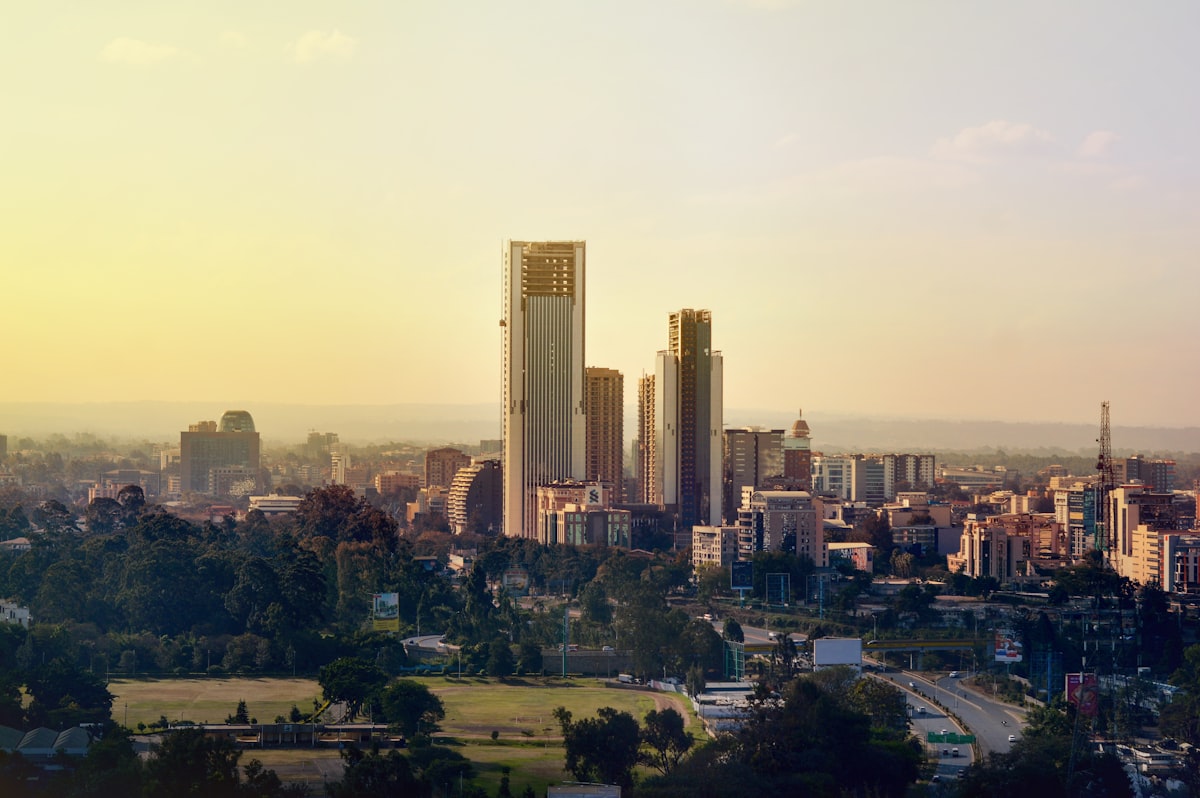
The global economic narrative in 2026 is dominated by familiar anxieties: interest rate uncertainty in the United States, deflationary pressures in China, demographic contraction in Europe and Japan, geopolitical friction reshaping trade routes. Amid this catalogue of worry, an economic story of extraordinary scale is unfolding with remarkably little attention from the world's major financial media.
Africa is the fastest-growing continent on earth. Not in potential. Not in aspiration. In actual, measured GDP growth.
The International Monetary Fund projects African GDP growth at approximately 4.3% in 2026 — compared with 3.2% globally, 1.8% for advanced economies, and 4.2% for emerging Asia. Six of the world's ten fastest-growing economies are African. The continent's combined GDP has grown from $600 billion in 2000 to over $3.4 trillion today — a nearly sixfold increase in a quarter century that mirrors the trajectories of Southeast Asia and China in their early high-growth phases.
This is not a flash in the pan. It is a structural shift driven by five converging forces that are unlikely to reverse within any reasonable investment horizon: demographics, urbanisation, the energy transition, digital transformation, and continental integration through the AfCFTA.
The Five Growth Engines
1. Demographics: The Youth Dividend
Africa has the youngest population on earth. Sixty percent of Africans are under 25. The median age is 19.7 years — compared with 38 in the United States, 44 in Europe, and 49 in Japan. By 2050, one in four humans will be African.
This is not merely a statistic. It is an economic force of historical significance. While every other major economic region faces the drag of ageing populations — rising pension costs, shrinking labour forces, declining consumer demand — Africa has an expanding workforce, a growing consumer base, and the generational energy that historically correlates with economic dynamism.
The demographic dividend is not automatic. It requires investment in education, healthcare, and job creation to convert a young population into a productive one. But the raw demographic inputs are unprecedented in scale — and countries that get the education-to-employment pipeline right (Rwanda, Kenya, Ethiopia, Morocco) are already seeing the growth effects.
2. Urbanisation: The Great Migration
Africa's urban population is growing by approximately 24 million people per year — the fastest rate of urbanisation in human history. By 2035, Africa will have more urban residents than any continent except Asia.
Urbanisation drives economic growth through concentration effects: when people move to cities, they consume more, produce more, innovate more, and participate more actively in the formal economy. Lagos, Nairobi, Johannesburg, Cairo, Kinshasa, Luanda, Dar es Salaam, and Addis Ababa are not just cities — they are economic engines whose GDP often exceeds that of entire neighbouring countries.
The construction boom alone is staggering. Africa needs an estimated 700,000 new housing units per year in Lagos alone. Cement consumption across the continent is growing at 8% annually. The infrastructure required to service urban populations — water, electricity, telecoms, roads, hospitals, schools — represents trillions in investment opportunity over the coming decades.
3. The Energy Transition: Africa's Strategic Moment
The global energy transition has transformed Africa from a peripheral resource supplier into a central strategic player. The minerals required for electrification, renewable energy, and battery storage are disproportionately concentrated in Africa: 70% of global cobalt (DRC), 70%+ of platinum group metals (South Africa), the world's largest bauxite reserves (Guinea), massive lithium deposits (Zimbabwe, DRC), and critical manganese, graphite, and chromium reserves distributed across the continent.
This is not a temporary advantage. The energy transition is a multi-decade structural shift, and demand for these minerals is projected to increase by 300-500% by 2050. Africa's resource position gives it bargaining leverage that did not exist in previous economic eras — and countries that use this leverage to capture value-addition (processing, refining, component manufacturing) rather than merely exporting raw ore will see transformative economic effects.
4. Digital Transformation: The Leapfrog Effect
Africa's digital economy is growing at approximately 25% annually — faster than any other region. The continent has leapfrogged entire technological generations: most Africans skipped landlines entirely and went straight to mobile phones. The same pattern is playing out in payments (mobile money instead of bank branches), commerce (e-commerce instead of retail chains), healthcare (telemedicine instead of clinic expansion), and education (edtech instead of university construction).
The numbers are striking:
Mobile money: Over $1 trillion in annual transactions, processing more money than many national banking systems. M-Pesa, founded in Kenya, is the template — but every major African market now has competing mobile money platforms.
Fintech: African fintech startups raised over $1.5 billion in venture funding in 2024. The sector is addressing a fundamental market gap — over 350 million African adults lack access to formal banking. Companies like Flutterwave, OPay, Wave, and Chipper Cash are building the financial infrastructure that traditional banks never extended to African consumers.
E-commerce: Jumia, Takealot, and a proliferating ecosystem of regional platforms are building online retail in a market where internet penetration is growing by 20% annually and smartphone adoption is approaching 50%.
5. Continental Integration: The AfCFTA Effect
The African Continental Free Trade Area — the world's largest free trade zone by number of participating countries — is progressively reducing the barriers that have kept intra-African trade at a historically low 15% of total African trade. As tariffs fall, customs procedures harmonise, and the Pan-African Payment and Settlement System (PAPSS) enables direct currency-to-currency trade, the volume of Africans doing business with other Africans is growing significantly.
This creates a virtuous cycle: increased trade drives investment, investment drives productivity, productivity drives competitiveness, competitiveness drives more trade. The companies building pan-African operations — Dangote Group, MTN, Equity Group, OCP — are the early beneficiaries of a structural shift that will shape the continent's economy for decades.
Country Spotlights: Where the Growth Is
Nigeria: Africa's Largest Economy at a Crossroads
Nigeria's $475 billion economy is the largest in Africa and among the most dynamic. Despite the turbulence of the 2023-24 naira devaluation (which saw the currency lose over 70% of its value) and the removal of fuel subsidies, the economy is stabilising. The Dangote Refinery — Africa's largest, with 650,000 barrels per day capacity — is fundamentally altering Nigeria's import dependency by refining crude locally. Fintech is booming, with Lagos producing more tech startups than any other African city. The challenge: translating macro growth into broad-based prosperity for 220 million people.
Kenya: East Africa's Innovation Hub
Kenya continues to punch above its economic weight through a combination of financial innovation, a strong services sector, and positioning as the gateway to East Africa. Safaricom's M-Pesa processes more transactions daily than many European payment networks. Nairobi's "Silicon Savannah" has attracted major investments from Google, Microsoft, and Visa. GDP growth of 5.5% is driven by agriculture, services, and construction — with the Nairobi Expressway and Konza Technopolis representing infrastructure investments that are reshaping the country's economic geography.
Ethiopia: The Manufacturing Bet
Ethiopia's pursuit of manufacturing-led growth is the most ambitious industrialisation strategy on the continent. Industrial parks in Hawassa, Bole Lemi, and Kombolcha produce garments, textiles, and light manufactured goods for export — attracting investment from H&M, PVH (Calvin Klein), and multiple Chinese manufacturers. GDP growth has recovered to approximately 7% following the conclusion of the Tigray conflict. With 120 million people, Ethiopia's domestic market alone justifies significant manufacturing investment.
Rwanda: The Governance Premium
Rwanda's economy — smaller in absolute terms at approximately $13 billion — is arguably the continent's most impressive success story on a per-capita basis. GDP has grown at an average of 7.5% over the past two decades, driven by services, ICT, and tourism. Rwanda consistently ranks as one of the easiest places to do business in Africa. Kigali has positioned itself as a convention, finance, and technology hub, hosting the African Development Bank's Eastern Africa office and attracting data centre investments from global tech companies. The country's growth rate of approximately 8% in 2026 is driven by construction, services, and an expanding agricultural value chain.
Côte d'Ivoire: West Africa's Economic Locomotive
As the world's largest cocoa producer and the anchor economy of the WAEMU zone, Côte d'Ivoire has sustained GDP growth above 6% for over a decade. The country is actively moving up the cocoa value chain — from exporting raw beans to processing cocoa butter, powder, and chocolate domestically. Abidjan is emerging as a regional financial centre, with the BRVM stock exchange providing capital market infrastructure for eight West African nations. Infrastructure investment — including the Abidjan Metro and expanded port capacity — is supporting continued urbanisation-driven growth.
Tanzania: The Quiet Powerhouse
Tanzania's economy has been growing at 6-7% annually with remarkable consistency — one of the most sustained growth performances on the continent. Mining (gold, tanzanite, gemstones), tourism (Serengeti, Zanzibar), agriculture, and emerging LNG development are the primary drivers. The discovery of massive offshore natural gas reserves, combined with the reactivation of the $34 billion East African Crude Oil Pipeline (EACOP) linking Uganda to Tanzania's Port of Tanga, positions the country for a resource-driven growth acceleration.
Sectors Driving Continental Growth
Financial Services
Africa's banking sector is among the most profitable in the world by return on equity. Financial inclusion — driven by mobile money, digital banking, and microfinance — is expanding the formal economy's reach to populations that were previously cash-only. African banking stocks (Zenith, Equity Group, GTCO, Attijariwafa, CIB Egypt) have been among the best performers on the continent.
Construction and Real Estate
The combination of urbanisation, population growth, and infrastructure demand has created a construction boom across the continent. Cement consumption is growing at 8% annually. Major infrastructure projects — trans-continental railways, port expansions, special economic zones, new city developments — represent combined investment of hundreds of billions of dollars over the next two decades.
Agriculture and Food Processing
Africa's agricultural sector employs more people than any other sector and holds the greatest potential for poverty reduction. The continent has 60% of the world's uncultivated arable land — an asset whose value increases as global food security becomes a geopolitical priority. Companies that introduce technology, irrigation, storage, and processing into African agriculture are tapping into one of the largest unmet market opportunities in the global economy.
Renewable Energy
Africa has the lowest electrification rate of any continent — approximately 600 million Africans lack access to reliable electricity. This is simultaneously a crisis and an opportunity. Solar energy potential is virtually unlimited (the Sahara alone could power the entire world), and the economics of off-grid solar are increasingly compelling. Companies like M-KOPA, d.light, and Zola Electric are building distributed energy systems that bypass the need for traditional grid infrastructure entirely.
What Could Go Wrong
Africa's growth story is real, but it is not risk-free. The honest investor must weigh several structural challenges:
Debt sustainability. Several African countries face elevated debt burdens, with debt-to-GDP ratios above 70% (Ghana, Kenya, Angola, Mozambique). Debt service costs — exacerbated by the perception premium that forces African governments to borrow at higher rates than fundamentals justify — consume fiscal space that could otherwise fund growth-enabling investment.
Climate vulnerability. Africa contributes less than 4% of global carbon emissions but is disproportionately affected by climate change. Droughts, floods, and rising temperatures threaten agricultural productivity, water security, and public health — with potential GDP impacts of 2-4% annually by 2050 if adaptation investment is insufficient.
Governance variation. The continent includes governance exemplars (Botswana, Rwanda, Mauritius) and governance challenges (DRC, South Sudan, Somalia). Investment outcomes correlate heavily with institutional quality, and the range of institutional quality across 54 nations is enormous.
External shocks. As commodity producers, many African economies remain vulnerable to global price cycles. A Chinese economic slowdown, a global recession, or a sustained commodity price collapse would disproportionately affect resource-dependent economies.
The Investment Thesis
Despite these risks, the investment case for Africa in 2026 rests on a simple arithmetic that no amount of pessimism can overcome: 1.4 billion people, the youngest population on earth, growing at 4.3%, urbanising at the fastest rate in human history, with the lowest institutional investment allocation of any major economic region.
The gap between Africa's economic reality and its allocation in global portfolios is perhaps the single largest mispricing in world markets. Sophisticated investors — sovereign wealth funds, frontier market specialists, Africa-focused PE firms — are already moving to close this gap. The question is not whether mainstream investors will follow. The question is whether they will do so before the mispricing corrects itself.
Africa's economy in 2026 is not a promise. It is a performance. The data is there for anyone willing to look at it without the distorting lens of narratives that were outdated a decade ago. The fastest-growing continent is not waiting for permission to grow. It is growing. The only question is who will participate — and who will watch from the sidelines and wonder what they missed.