This series has followed a single question across the continent: can mineral wealth become national wealth? The DRC is testing it with cobalt quotas. South Africa hopes hydrogen will answer it. Nigeria just answered it in concrete at the Dangote Refinery. Part 4 goes to the country running the boldest version of the experiment with the newest strategic mineral: Zimbabwe, anchor of Africa's lithium belt.
The Belt
Hard-rock lithium runs through the continent in a loose arc. Zimbabwe holds Africa's largest known reserves, mined at Bikita — a deposit worked since the 1950s, long before anyone imagined car batteries — plus Arcadia and Sabi Star near Harare. The DRC's Manono deposit, which we covered in Part 1, is potentially among the largest hard-rock lithium resources ever delineated but remains stalled in ownership disputes. Mali's Goulamina has entered production despite the country's security crisis; Ghana's Ewoyaa is advancing toward first ore; Namibia and Ethiopia host earlier-stage projects. Taken together, Africa is on track to supply a meaningful share of the world's lithium within this decade — from close to nothing five years ago.
The Land Grab
The speed of Zimbabwe's build-out has few precedents in African mining. In roughly three years, Chinese battery-chain companies committed well over a billion dollars: Sinomine acquired and expanded Bikita; Zhejiang Huayou Cobalt bought the Arcadia project and built its mine and concentrator in under eighteen months; Chengxin Lithium developed Sabi Star. The pattern mirrors what we described in the DRC: Chinese midstream players securing upstream feedstock for refineries at home, integrating Africa into a battery supply chain whose value-added stages sit elsewhere.
Which is precisely what Zimbabwe moved to interrupt.
The Export Ban: Value Addition by Decree
In December 2022, Zimbabwe banned the export of raw lithium ore, requiring miners to process to concentrate within the country at minimum — and signalling that the bar will keep rising toward battery-grade lithium sulphate and, eventually, full chemical processing. Miners duly built concentrators; the government has since pressed for the next stage, with producers announcing plans for local sulphate plants.
It is the same policy instinct we identified in our African trade briefing — where roughly 70% of the continent's export value leaves as raw commodities — turned into law. Indonesia proved the model with nickel, banning raw ore exports and forcing a domestic smelting industry into existence. Zimbabwe is attempting the African version, and the DRC, Namibia, and Ghana have all followed with restrictions of their own. Whatever one thinks of the execution, the era of African governments passively exporting battery minerals is visibly ending.
The Crash: A Stress Test Arrived Early
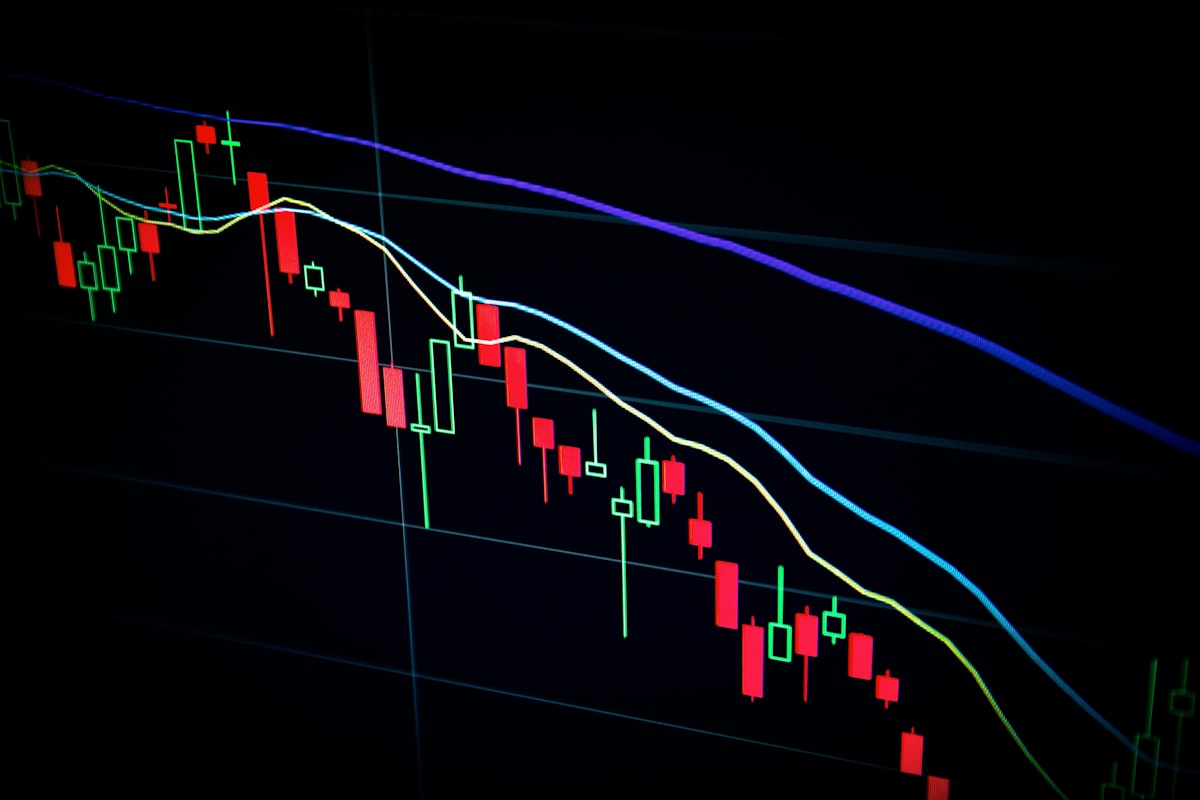
Then the market turned. Lithium carbonate, above $80,000 a tonne in late 2022, collapsed by 80–90% as new supply worldwide met slower-than-hoped EV demand — the same demand wobble that hit the PGM market we covered in Part 2. For Africa's lithium belt the crash was a brutal early stress test: high-cost projects stalled, juniors' share prices were decimated, and the economics of local processing — already capital-hungry — got harder.
Yet the core of the Zimbabwean industry kept producing. Integrated Chinese owners, mining feedstock for their own refineries, optimise for supply security rather than spot margins — a structure that cushioned the belt through the trough. And the long-term demand case did not change: every credible energy-transition scenario still requires multiples of today's lithium supply by the 2030s. Cycles are brutal; the direction is not in doubt.
How to Get Exposure
- Listed juniors — the practical public-market route: London- and Australia-listed developers across Zimbabwe, Ghana, Mali, and Namibia. High risk, high beta to the lithium price.
- Integrated majors — Sinomine, Huayou, and Chengxin trade in Shanghai and Shenzhen; lithium is one part of larger battery-chain businesses.
- The picks-and-shovels route — logistics, power, and banking around the belt; the broader access playbook is in our guide to investing in African markets.
The risk ledger is the frontier standard: price volatility above all, policy uncertainty (export rules have changed fast and can again), currency instability, and — in Zimbabwe's case — a difficult macroeconomic history that keeps its own stock exchange outside most investors' reach.
The Bigger Picture
Zimbabwe's lithium experiment is the sharpest version of the question this series keeps asking. The country moved faster than any peer to capture a new strategic mineral, imposed value-addition requirements while the boom was still hot, and then had to hold the policy through a historic bust. If battery-grade processing genuinely arrives on Zimbabwean soil this decade, it will be the strongest evidence yet that African resource nationalism can build industries rather than merely tax them. If it stalls at concentrate, the belt becomes one more raw-material corridor. Either way, the outcome will shape how every African government negotiates the energy-transition minerals on its soil — and we will keep tracking it here and in the Africa 30 Index.
Sources & Methodology
Reserve, production, and investment figures reference USGS mineral commodity summaries, company disclosures (Sinomine, Zhejiang Huayou Cobalt, Chengxin Lithium), and Zimbabwean government policy statements. Prices are stated as approximate historical ranges. Company mentions are not recommendations. This concludes the initial four-part Resource Wealth Series; further country deep-dives will follow. Nothing here constitutes investment advice.